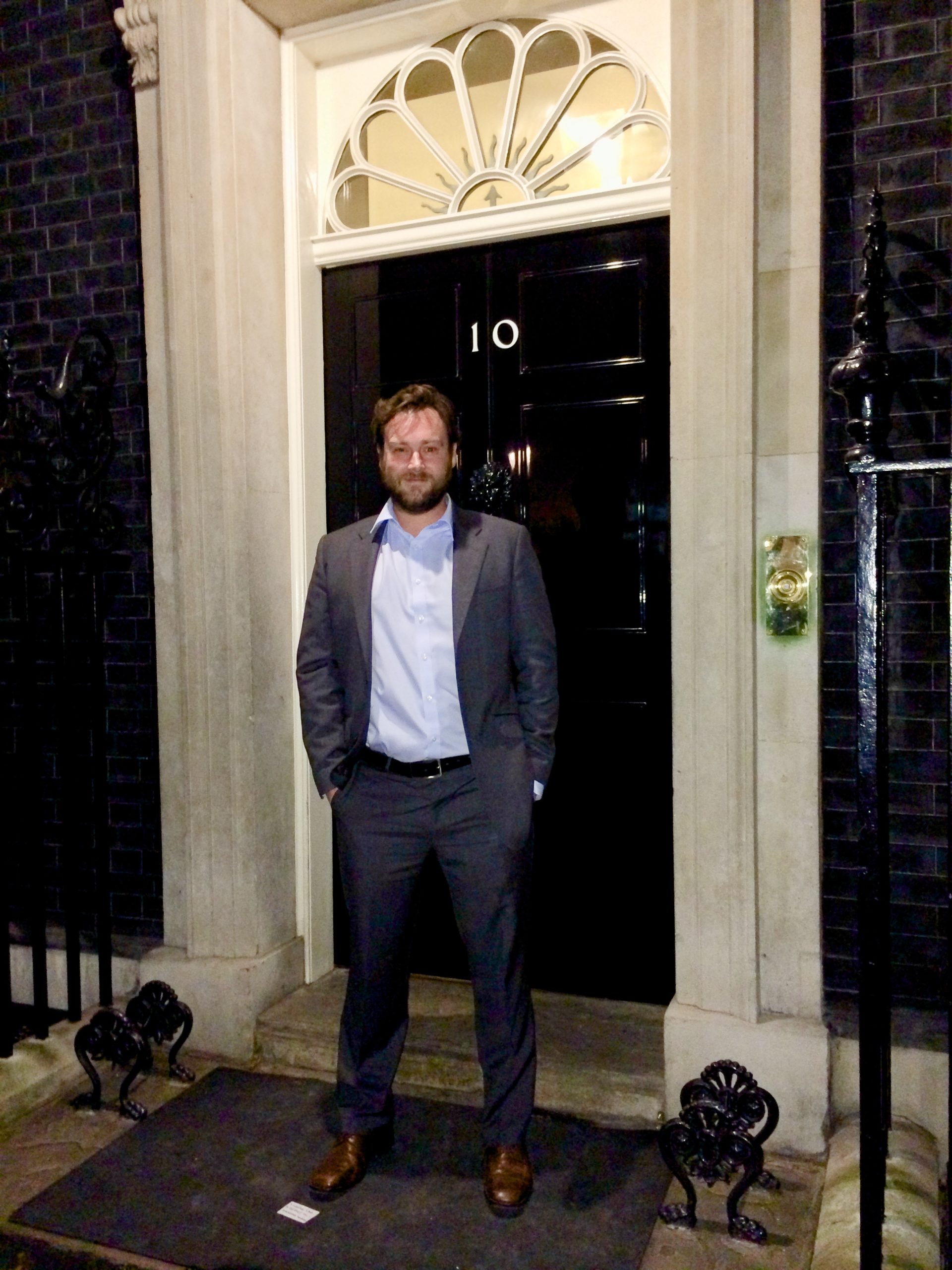
Went to the Chinese New Year celebrations this year in Soho London and took a few snaps. ♥️ London.


Went to the Chinese New Year celebrations this year in Soho London and took a few snaps. ♥️ London.
Nice.
font-feature-settings: "liga" 1, "clig" 1, "dlig" 1;ch: character, choice, chromatic
ck: tracking, back, flick, quick
cl: clarity, classic, clickable, clean
ct: contrast, compact, select, direct
sh: sharp, shadow, stylish, flourish
sk: sketch, skill, masking, brisk
sl: sleek, slight, display
sp: spacing, aspect, crisp, perspective
st: style, stroke, structure, consistent
me: no problemo
Anon
narrator: but it was all problemo
This is more of an observation rather than an attempt to reach any definitive conclusion. It’s just something I’ve noticed over the past decade or so in the web development landscape.
The Agile Manifesto consists of values and principles agreed upon by a group of 17 software practitioners in 2001.
First, let’s revisit the core values:
In many ways, much of the modern development landscape seems to align with these core values. Good job, team—end of post….
…..Wait, let’s take a quick look at the Twelve Principles of Agile Software, listed on page 2:
I would say this is where we start to see some cracks developing. One takeaway I have from this is that the entire ‘working together’ aspect seems to have gone AWOL.
Business people and developers
Development team…face-to-face conversation
Emerge from self-organizing teams
Over the years, while working on many projects for a variety of clients, I’ve seen how many of the core principles from the Agile Manifesto have been gradually put through their own production line, resulting in something more akin to Homer’s car—somewhat un-agile.

Back in the late ’00s, I was regularly part of multi-disciplinary teams delivering software—designers, developers, consultants, project managers. Often, these roles blended together, such as in the case of responsive design, which was often delivered by developers rather than designers. I would even run workshops directly with users. I really wanted to deliver the software for users as I knew directly what they were trying to achieve. It seemed to work well.
However, something seemed to change in the early to mid-2010s: Agile at Scale. Suddenly, Kanban boards were being gamified, with points, velocity, fixed sprints, quality assurance, and go-live schedules. And then there was…Jira (shudder). On some projects, QA was only concerned with how closely the web page matched the visuals (with Figma and Sketch trying their damnedest to drag us back to Photoshop slicing). I would regularly spend hours explaining why the line breaks were different on a phone than on the 1920px layout. I thought we had moved on, I was wrong.
Increasingly, I was no longer involved in any discussions about core user goals, or even exposed to them. It was all about delivering layouts based on designs. I might get a glimpse of a KPI, but only if it involved applying a Google Tag Manager trigger. My job became moving a ticket along a board from the Sprint 𝑥 column to the QA column. Further, because development wasn’t involved in the early discussions, accessibility and performance were often dropped entirely (or moved to Sprint 𝑥-1). So much for continuous attention to technical excellence and good design enhancing agility.
Now, there is certainly some cyclicism (and quite possibly cynicism) here. Some members of the design community did not like losing control over the final look, and I get that. Project managers were pushed and pushed on delivery, and I understand that. Clients wanted a clearer idea of cost and fixed deliverables, and I get that too. There was always likely to be some pushback, but it is disheartening nonetheless.
I also have a feeling that the rise of the Front-end Engineer, React, and Developer Experience (DX) played both a role in and a response to the development and re-siloing of software development. More powerful design tools, such as Figma and Sketch, allowed for seemingly production-ready pages to be presented directly to clients, bypassing the hot mess that is working software. Covid probably had quite an impact as well.
It’s important to caveat this by saying that not every project followed this trend. Many of the best (and successful) projects I worked on included developers in the entire process or at least bringing us along for the journey, allowing us to contribute to the project as a whole and even contribute to solutions that enabled users to achieve their goals. But this became increasingly rare.
Obviously, as the years go by, these values and principles should evolve. Face-to-face conversation, for example, is something that can and should now be done digitally. The same applies to how we engage with users.
Many of the dragons we fought early on resulted in better, cheaper, more robust, faster, responsive and more accessible software. It feels like we are unlearning important lessons.
Taps the sign:
In an age where AI is barreling towards us, it is important to revisit these core values and principles, as they can help us navigate the rapid changes ahead. Rather than transforming the production line into a fully automated one, we should remember that individuals and interactions, continuous improvement, and responding to change remain valuable guiding principles—even as we approach 25 years since they were first manifested.
On November 16, 1999, I started working as a web developer—though the role wasn’t called that back then. I regularly worked with HTML and CSS, so that’s effectively what I was. And so here we are today, 2024, and I’m still at it, 25 years as a web developer. To celebrate, I thought it would be fun to reflect on a selection of websites I’ve built over the years, with one example from each year.
1999: Macmillan Reference
My first job. Sent my first-ever email on my first day which I was late for. I think I did some HTML/CSS on the second. I was hired by a reference publisher (Macmillan) as a Web Development and Marketing Assistant—a mix of IT help desk and corporate website updates. This was back in the last century, so the web felt pretty bare metal, straight to prod.

2000 Grove Dictionary of Art, Grove Dictionary of Music
Working at the reference publisher as we entered a new century, the large works that they worked on started to be published online, one example, The Grove Dictionary of Music website, launched in 2001 was a subscription-based website. I managed the marketing site, handled the access system (mostly IP address entries), and provided online support, directly interacting with customers—a useful and somewhat eye opening experience in peoples’ range of online skills.
Article reference: The Guardian on Grove’s Online Music Book

2001: In The Field
While working full-time, I occasionally took on side projects. This one was a companion site for a BBC World Service radio program. I collaborated on it with my girlfriend, Nell Greenhill (now wife), building and illustrating the website with actual scanned-in paintings. The site was 640px wide, 216 colors and used RealPlayer files! The site was online for the best part of 20 years, but eventually shuffled off to the big container in the sky (or a shipping container in San Francisco). Although I did archive off an instance of it.

2002: S&R Greenhill
This was a website for my future parents-in-law’s photo library. It’s still online at srgreenhill.co.uk, the earliest of my creations still accessible today. It exists mainly because I registered the domain. Given how many of my sites have disappeared it’s good to keep a few little remnants around.

2003: Palgrave.com
Since around 2001, I’d been managing Palgrave Macmillan’s academic publishing website. The Grove department separated and was eventually sold to Oxford University Press. Our office was in King’s Cross (before it was gentrified), sharing a sparse office with Lord Stockton and a small imprint below the Regent’s Canal waterline—a surreal time. I was still mostly hand-coding the site in HTML with some ASP for e-commerce and search functions.

2004: dogwonder.co.uk
I’d been increasingly interested in the self-publishing side of the web, blogs especially. I think I started with Blogger but found WordPress exciting, the idea of hosting your own instance, so I registered my domain name, uploaded some files via FTP, edited wp-config.php, and started blogging.

2005: Companion websites
We frequently bundled websites with textbooks, adding resources and downloads like a CD-ROM but more webby.

2006: B&N fabrications
Another private project, this one for a friend’s company. I maintained their website and email server for many years. Each year, the owner would send a cheque for hosting and email, until I received a handwritten note in 2022 saying they no longer needed the service as the boss was retiring—a reminder of my own longevity in this field.

2007: Palgrave.com V2
I managed a design refresh of Palgrave Macmillan’s website, coordinating with the IT team in Bangalore, India. We had started to host Author blogs as well, I can’t remember how they worked, but I think it was email >> me >> website.

2008: MetroTwin
After eight years in publishing, with the same job title and as the only web-focused person in my division, I knew I needed a change to grow. After a somewhat frustrating job search and some frankly weird recruiters, one of which I had to block, a nice recruiter found my CV (on Monster.com?!) and reached out about a company called Headshift. I went in for an interview, loved the team, and they seemed to like me. I joined as a Front-end Developer in March 2008. On my first day, I was tasked with quickly learning Movable Type—a big step up from the more unhurried nature of publishing. Within a month, we were subcontracted to work onsite at an ad agency (BBH) for a major client, British Airways. The site was built on Ruby on Rails, with Agile project management, daily stand-ups, and kanban. I was a bit out of my depth but excited to take on new challenges and (had to) learn fast. I would spend the next 4 or so years working with some brilliant people.

2009: BBC Blogs
After building several Movable Type based sites, Headshift won the contract to rebuild the BBC’s blogs, also on Movable Type. This was my first experience using a full UX process, including user research and basic wireframes (rather than full comps). We used the BBC’s new design system, Barley, and worked to centralise global navigation components like the masthead and footer. I ended up rebuilding around 100 blogs across the organisation, including multilingual versions. Peston, Victoria Derbyshire, BBC Internet blog, BBC News and Sport blogs. Loads.

2010: Frontline Club
Another Movable Type project—this time, a site for the Frontline Club, with about 20-30 blogs. The site also included a shop and a booking system, though my focus was mainly on the blog component.

2011: CDKN
Headshift’s approach became more UX-driven, and responsive design became a standard. The front-end development team, seated in the Design department, collaborated closely with designers and developers to ensure we met user needs. I was involved in workshops to fully understand site goals, and sometimes we even co-designed sites alongside clients. We often delivered websites through an iterative process, incorporating feedback from users, the client, and our own teams. CDKN was one of those, built in WordPress as it became more of a fully featured CMS.

2012: Cavendish School
After more than four great years at Headshift (which was acquired by Dachis Group around 2010 and subsequently pivoted toward products, away from the services side of the business), I felt burned out and ready for a new direction. I wanted more control over my career, so I took a leap and went freelance, establishing Dogwonder Ltd. The nickname “dogwonder” came from my publishing days via a colleague and friend, inspired by the Hanna-Barbera character Dogwonder the Dyno-Mutt on account of my technical prowess. I used it for many years as my internet handle, back when people tended to be a little more obfuscate. Amazingly, the company name had been previously registered but dormant so I was able to secure it, and so Dogwonder Ltd was born. I left Headshift in September 2012—it was scary in hindsight, but necessary. My early projects were for small to medium-sized businesses, mostly WordPress-based brochure sites that clients could easily manage. Cavendish School, a school in Camden, was one of my first projects. I even ran workshops to gather requirements and understand user needs. For the next few years I would happily collaborate with an old friend and designer Rob Kester and a company called Make Happy both of whom I shared an office with (and still do) in London.

2013: HighQ.com
Thanks to my network, I began collaborating with other designers, developers, and project managers on projects. HighQ was a large, feature-rich website requiring a strong front-end with responsive design. I worked as the front-end developer alongside a back-end/devops ex-colleague. This was one of the more advanced sites I’d tackled, with extensive CSS, PHP, WordPress, and UX work—showcasing what was possible with web advancements.

2014: ONE.org
With a friend former colleague Felix Cohen, I pitched for the ONE.org website rebuild for the global advocacy organisation founded by Bono. We won, marking the start of a 10-year collaboration with ONE’s brilliant digital team on countless campaigns and microsites. Built on WordPress, ONE.org allowed the team to create and manage feature rich pages via WordPress, with campaign support through ActionKit, a powerful tool for advocacy campaigns. Serving over a million users annually, this was a significant project for me.

2015: Access Aspiration
Another WordPress project (a pattern develops) Access Aspiration connected disadvantaged young people with work experience opportunities. Working with a designer friend, I helped build a website for the organisation, even visiting 11 Downing Street with some of the young people involved in the project.

2016: Andiamo
I collaborated with Andiamo’s founders, Naveed Parvez and Lee Provoost, along with co-founder Samiya Parvez (the first two former colleagues from Headshift), on an innovative project revolutionising the orthotics industry. Andiamo leveraged cutting-edge technologies like 3D printing and scanning to transform healthcare processes. Their mission was to reduce pain, frustration, and inefficiencies in orthotic care, creating a more empathetic and patient-centered experience that ultimately delivered better outcomes for those in need.

2017: Redmonk
I partnered with Redmonk, a well-known tech industry analyst firm, to build their website and support their writing and events, including Monkigras.

2018: Wikitribune
A unique opportunity to work with Jimmy Wales, founder of Wikipedia, on Wikitribune, a crowd-sourced news website where users and journalists collaborated. I used WordPress to quickly bring the platform to life. Working alongside Jimmy was inspiring; he’s a lovely, brilliant, committed advocate for a free web.

2019: Public Digital
Founded by former GDS (Government Digital Services) people, Public Digital approached me to build an early iteration of their website, bringing the ethos of GDS digital principles to large businesses, governments and institutions.

2020: RNID
Working with RNID (a national deaf and hearing loss charity), I collaborated with their content team to build a new website. COVID-19 forced us to accelerate the launch to provide critical information, especially for the deaf and people with hearing loss, who faced unique challenges. Using GOV.UK frontend components allowed us to prototype and release features quickly, in a truly agile process.

2021: Tropical Isles
A pro-bono project, I collaborated with my wife Nell Greenhill, who provided the designs, to build a site for Tropical Isles, a charity that supports children and young people through carnival arts.

2022: policefundingdatabase.org
Working with Durable Digital (founded by a one of my oldest friends Shane Marsden), I worked on a project for the Legal Defense Fund to create a really important site that provided a searchable database on police funding and equipment transfers across the U.S. Built on Umbraco, for once a shift away from WordPress.

2023: ONE.org
A career highlight, this was a major rebuild of the ONE.org core site, a project evolving from the original 2014 theme I rather stupidly named “one_2014.” With over a decade of WordPress experience, I created a site that was accessible, fast, SEO-optimised, and user and editor-friendly.

2024: Chancery Lane
Working with the Chancery Lane Project, an organisation dedicated to reducing emissions through legal reform, I collaborated with Felix Cohen to deliver a fast, accessible website rooted in solid UX principles. We relied on GOV.UK frontend components to build efficient forms and interfaces, creating a user-focused experience.

Yeah, I know it’s 26.